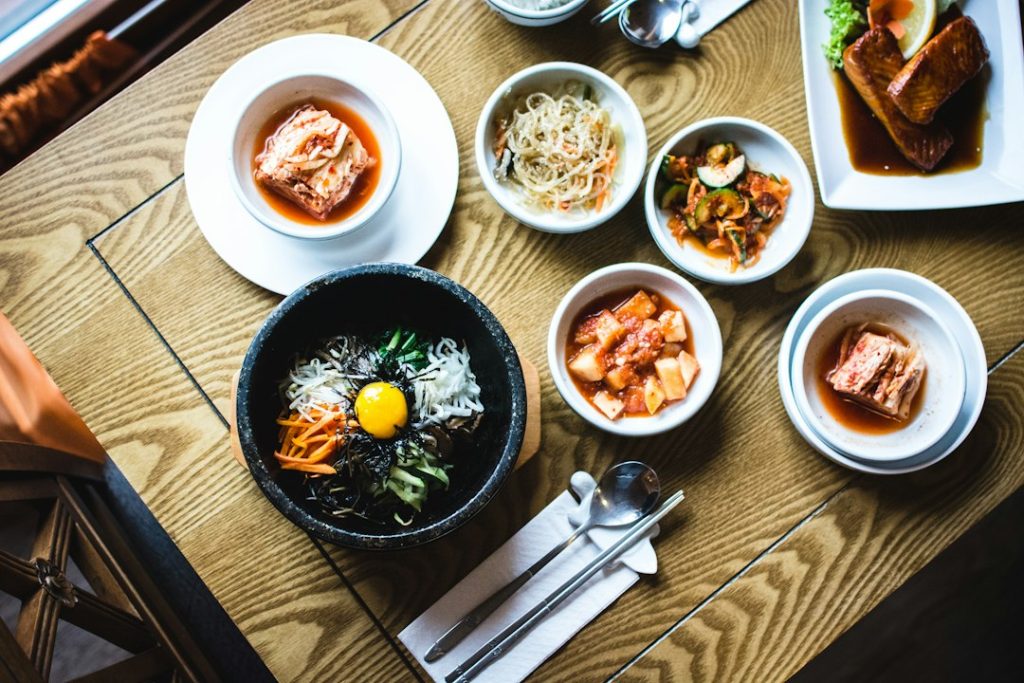
Eating at a Korean restaurant can be one of the best parts of a visit, but menus, shared side dishes, and unfamiliar ingredients can make ordering feel intimidating. A little preparation helps you order confidently without assuming that every restaurant serves food in the same way.
Start by identifying the main dish
Many menus group dishes by type, such as rice dishes, noodles, soups and stews, grilled food, or shared dishes. If the menu is only in Korean, use a translation app or show the staff a photo of the dish you want. Check whether the listed price is per person, per serving, or for a larger shared portion.
Understand banchan and shared dishes
Banchan are small side dishes commonly served with a meal. The selection varies by restaurant, and not every side dish is suitable for every diet. Some restaurants offer refills, while others have different policies. If you are unsure what something contains, ask before eating it. For barbecue or hot-pot meals, confirm whether the price is per person and whether a minimum order applies.
Ask about spice, meat, seafood, and broth
A dish that looks vegetable-based may contain meat stock, fish sauce, shrimp paste, or other animal-derived ingredients. Red color does not always tell you how spicy a dish is, and a dish described as mild may still contain chili. If an ingredient is important for your health or diet, explain the restriction clearly and ask staff to confirm whether the kitchen can accommodate it.
Useful phrases to show restaurant staff
- 맵지 않게 해 주세요. — Please make it not spicy, if possible.
- 고기가 들어가나요? — Does this contain meat?
- 돼지고기가 들어가나요? — Does this contain pork?
- 해산물이 들어가나요? — Does this contain seafood?
- 알레르기가 있어요. — I have an allergy.
- 이 메뉴 하나 주세요. — One of this menu item, please.
For a serious allergy, do not rely on a short phrase or translation app alone. Show a written allergy card in Korean that names the exact allergen, explain that even small amounts may be dangerous if applicable, and ask whether cross-contact can be avoided. If the restaurant cannot confidently confirm, choose another place.
Ordering and paying
Some restaurants use paper menus, counter ordering, table tablets, or QR menus. Look around for the ordering method used by other guests, or ask staff for help. At the end of the meal, check whether you pay at the table or at the counter. Payment methods vary by business, so carry a backup card or another accepted payment option.
Before you sit down
- Check the menu and whether portions are individual or shared.
- Ask about ingredients that matter to you, especially allergens and broth.
- Confirm spice level and cooking method if you are sensitive to chili or raw ingredients.
- Check the ordering and payment method.
- Be considerate of restaurant rules about waiting, table use, and peak-hour dining.
Bottom line: Photos help you choose a dish, but they cannot confirm ingredients or allergy safety. Ask specific questions, use a written Korean allergy card when necessary, and follow the restaurant’s guidance.
Photo: Jakub Kapusnak / Unsplash.